
“Reading a muscle shouldn’t need a lab, a budget and an expert.”
e‑moon
Wireless EMG kit · thesis project with DCircuits
Collaboration
DCircuits · electronics and programming
Role
Industrial design of the whole product · app design direction
Status
Thesis project · working prototype
Year
2021–2022
Recognition
Honorable mention · 8th Ibero-American Design Biennial (BID22), 2022
Credits
Prototyping: Soon Studio · Photo and film: Pedro Mena · Gymnast: Ashanty · Gymnast direction: Ariana Ramírez · Advice: Rafael Hernández, Mirai Innovation
EMG lives in labs.
Lab EMG systems cost and need someone trained to read them. e‑moon was designed to cost about 22% of an average system.
2022 prices, from my thesis research. Hover or tap the price for euros.
Wired, in a clinic
- Highly accurate
- Medical-grade
- High price
- Needs a specialist to read

Wireless, in a lab
- Highly accurate
- Free movement
- High price
- Hard-to-use software
Images: Johns Hopkins Medicine · Delsys Trigno, figure from a paper on ResearchGate
Four parts, one kit.
Each sensor reads one muscle. The receptor collects the signals; the app shows them.
Hover or tap a part
The whole kit on one desk.
A dock that does the setup.
Magnetic pogo pins charge the four sensors and hold them in place.

Magnets in the pogo pins pull the sensor into place.

Each sensor takes one of four LED colors when paired, so none needs a number.

Three folded sheet-metal parts the user can assemble by hand.

Inside the receptor: like a mouse’s USB dongle, with about 5 m of range.
On the body.
One sensor per muscle.

On the shoulder.
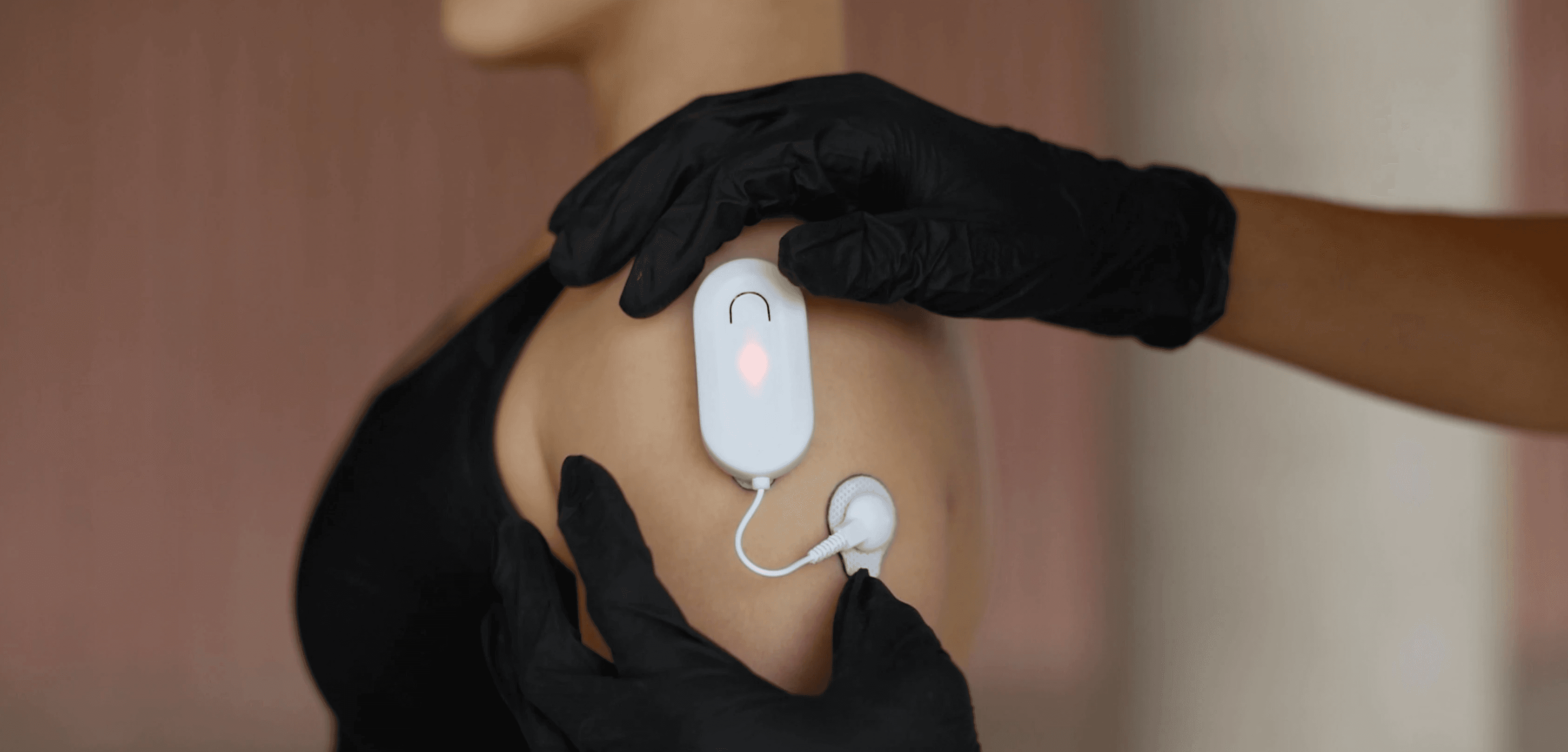
Placing the electrode.
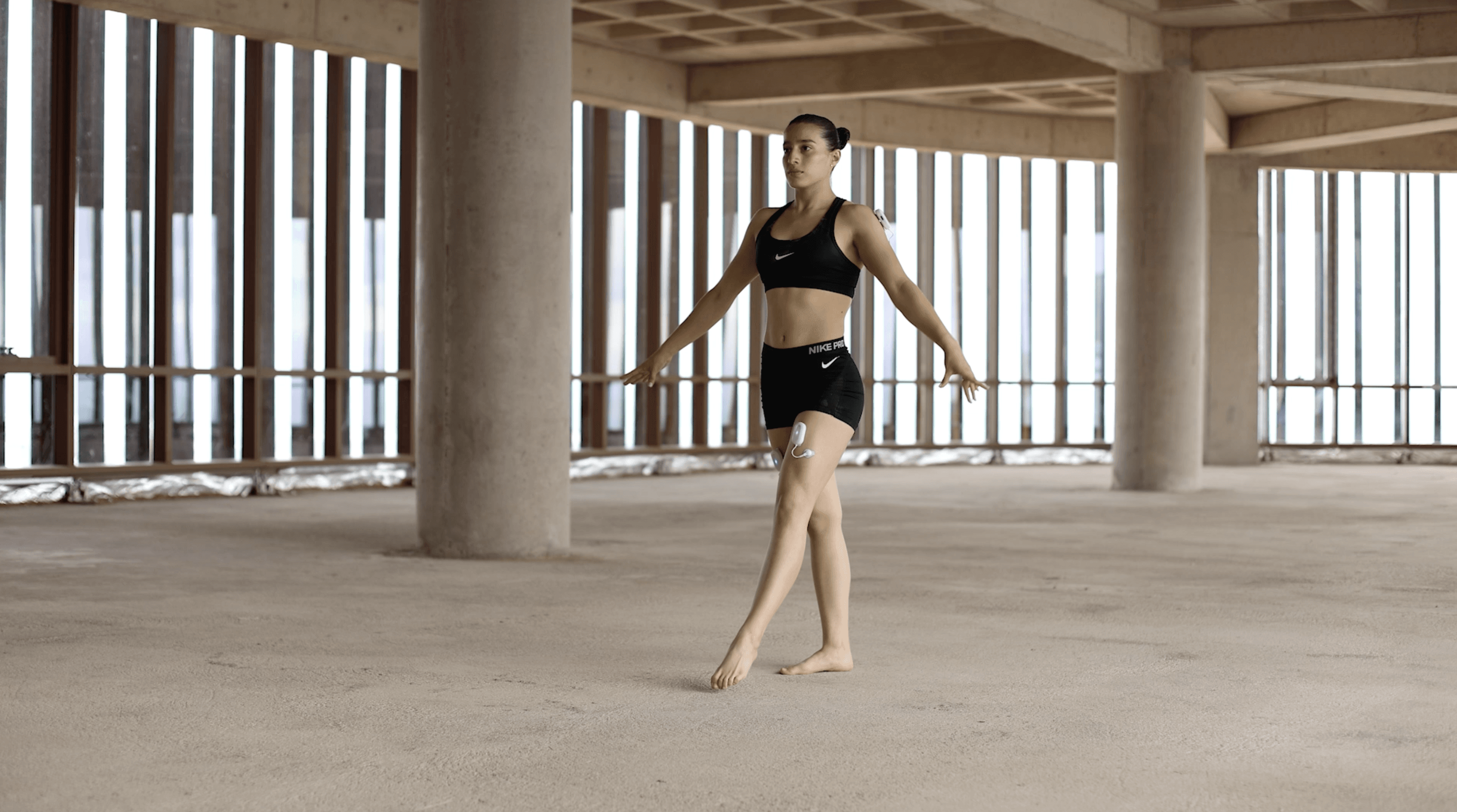
In movement.

Shoulder and thigh.
The app.
Motion maps each sensor to a muscle and plots its EMG, accelerometer and gyroscope signals in real time. I directed its design; DCircuits programmed it.
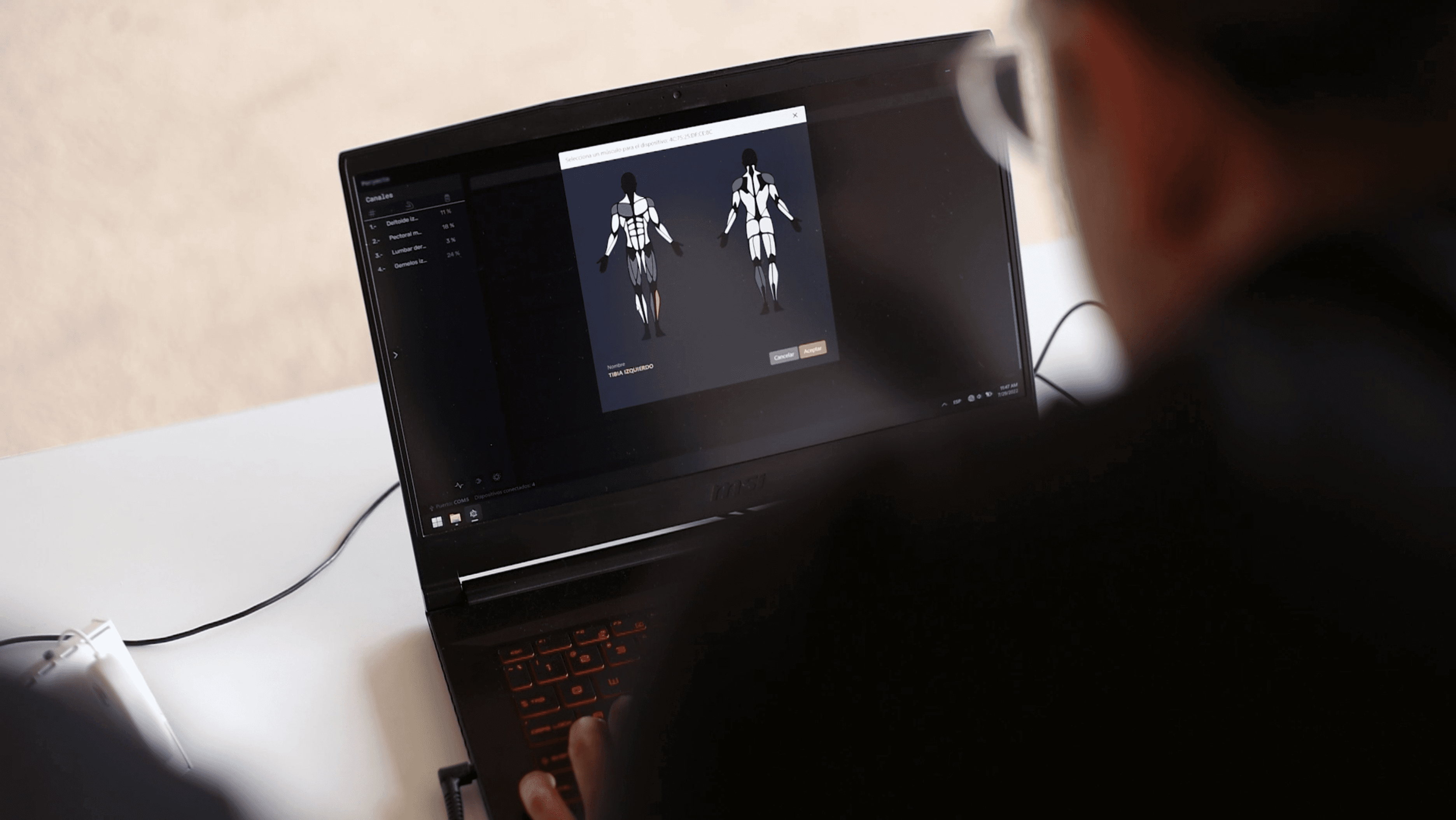
Motion, the e-moon app.
The e-moon video.
How it got here.
Sketches, form models, early tests and dock prototypes.

Thumbnail sketches.

Exploring the form in 3D.
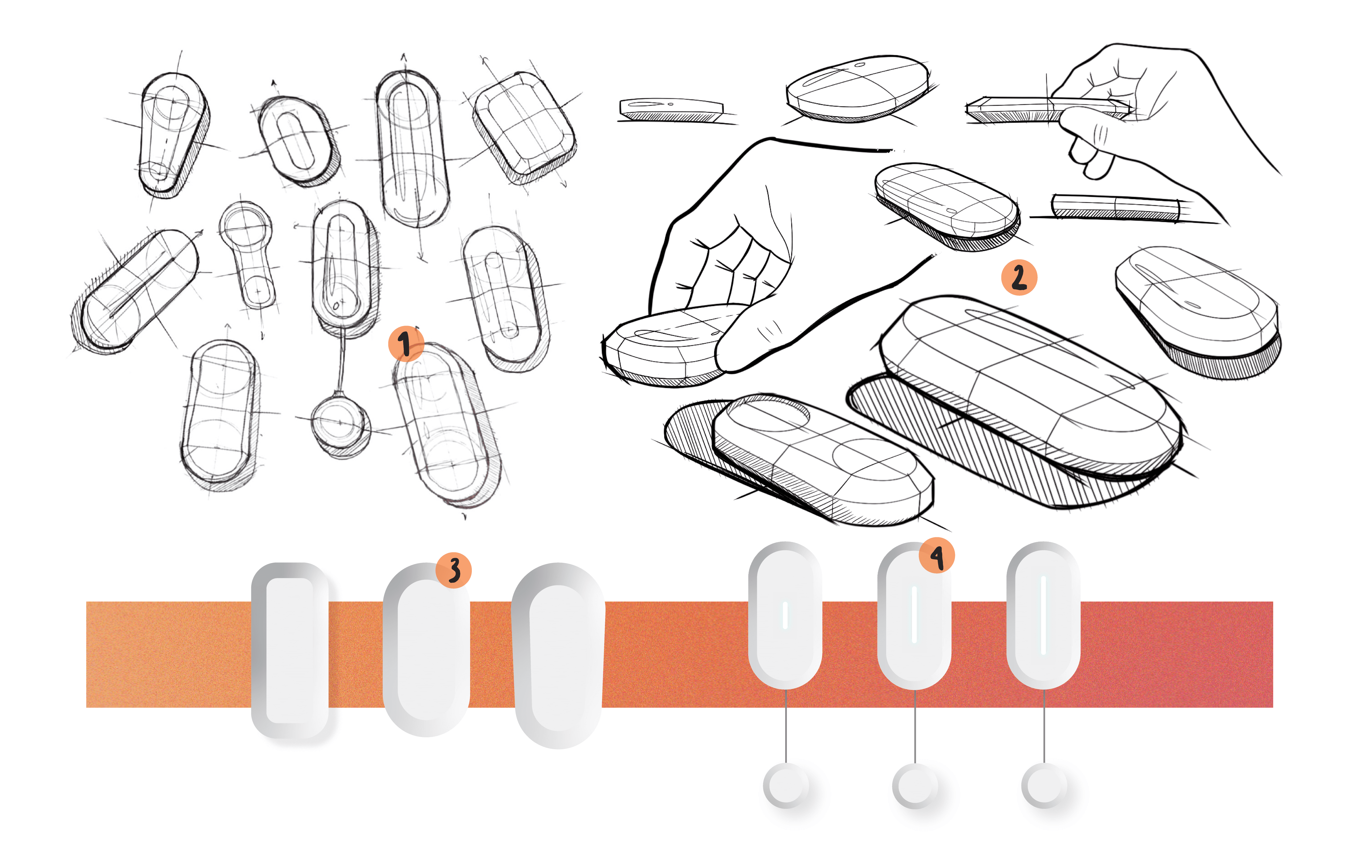
Refined sketches.

Form models.

Sensor and electrode.

A three-part housing, where five to seven is usual.

Dock prototypes.
“I started with 20% faith I could build it.”
A designer doesn’t need to know how to do everything, but to clarify, direct, connect the dots and trust a solid team.